- Monday - Friday 08:00-17:00
- (+91) 0123456789
Energy recovery technology captures up to 94% of waste heat as hot water or hot air and lets you re-use it for applications that need it anyway, like HVAC systems or industrial processes.
Compressing air generates a lot of heat. In fact, most of the electrical energy that goes into a compressor is converted into heat. Without energy recovery, this heat gets dissipated back into the environment. Energy recovery technology captures up to 94% of this waste heat as hot water or hot air and lets you re-use it for applications that need it anyway, like HVAC systems or industrial processes. That means you get to use your compressor’s energy twice.
At a time when energy efficiency has become a top priority, compressor heat recovery is one of the most significant means to lower your operations’ energy use as well as your carbon footprint.
Over the lifetime of a compressor, energy makes up about 80% of its total cost of ownership. That is why using a highly efficient model is key. Next to choosing the right compressor, energy recovery is the technology that will have the biggest impact on your operational energy use.
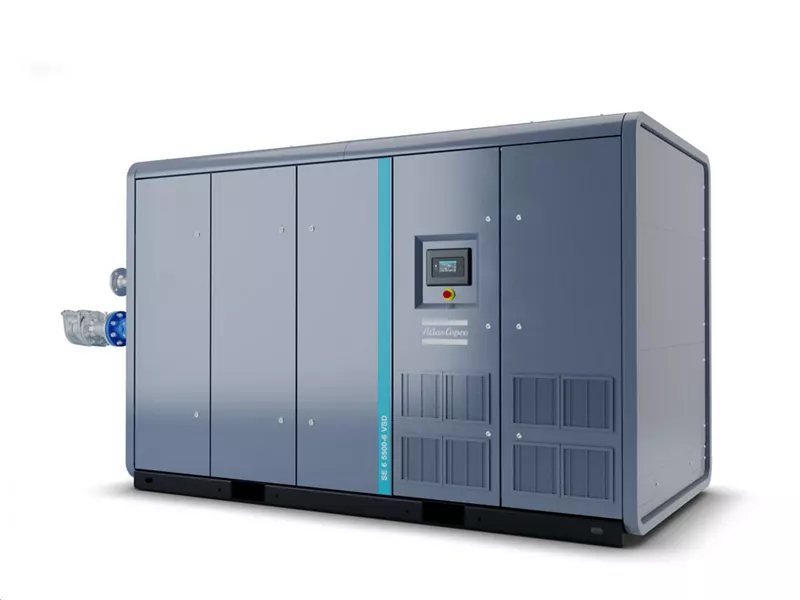
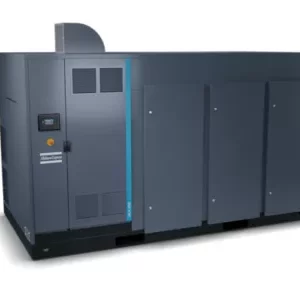
The oil/water heat exchanger that allows you to capture your oil-injected screw compressor’s waste heat and re-use it as hot water.
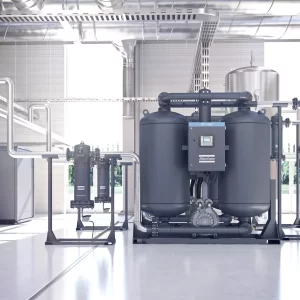
Store your recovered hot water for 24 hours and use it when you need it. 400- and 800-liter vessels are available.
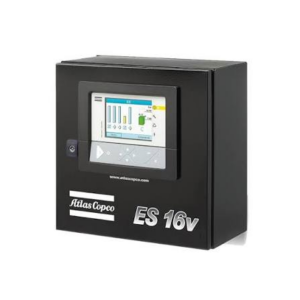
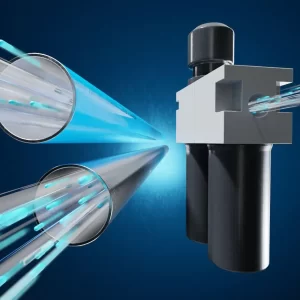
Use the advanced Elektronikon controller to monitor and optimize your oil-injected screw compressor’s energy efficiency and recovery.
Recover up to 80% of your oil-injected screw compressor’s waste heat as hot water and re-use it somewhere else as hot water or steam.
The compression process generates a lot of heat in the drivetrain. In oil-injected compressors, this heat is captured by the oil, which is then cooled in the oil cooler. With Atlas Copco energy recovery technology, the hot oil is redirected from the drivetrain to a heat exchanger. In this heat exchanger, the heat is efficiently transferred to a water supply connected to the compressor. You now have water with a temperature of up to 95 degrees Celsius ready for use somewhere else.

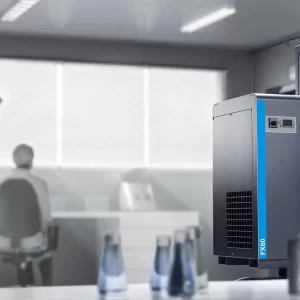
Your oil-injected screw compressor’s waste heat can also be re-used as hot air. You can capture up to 94% of this waste heat and duct it out for drying and heating applications.
The Atlas Copco Thermo Kit is the easy, all-in-one energy recovery and storage solution. It captures the waste heat of your compressor as hot water and stores it in a buffer vessel until you need it. Thermo Kit is often used for central heating, but it can also be employed in other closed loop hot water systems.
Thermo Kit includes a buffer vessel, a circulation pump, a control box, and all required connector parts.
To meet your specific needs, Thermo Kit is available with two vessel sizes, 400 and 800 liters. The vessels can be used with Atlas Copco GA oil-injected screw compressors that offer the Energy Recovery option. Your Atlas Copco representative can help you determine which vessel type will work best for you.
| Compressor size |
Installed motor power |
Recoverable power/energy* |
Water flow** (ΔT = 10K) |
Water flow** (ΔT = 50K) |
||||
|---|---|---|---|---|---|---|---|---|
| kW | Hp | kW | Hp | l/min | GPM | l/min | GPM | |
| 5.5 | 5.5 | 7.5 | 5.5 | 7.4 | 6.5 | 1.7 | 1.6 | 0.4 |
| 7.5 | 7.5 | 10 | 7 | 9.4 | 10.2 | 2.7 | 2.0 | 0.5 |
| 11 | 11 | 15 | 10.3 | 13.8 | 14.8 | 3.9 | 2.9 | 0.8 |
| 15 | 15 | 20 | 14.4 | 19.3 | 19.4 | 5.1 | 4.1 | 1.1 |
| 18 | 18 | 25 | 18.2 | 24.4 | 26.2 | 6.9 | 5.2 | 1.4 |
| 22 | 22 | 30 | 20.9 | 28.0 | 29.9 | 7.9 | 6.0 | 1.6 |
| 26 | 26 | 35 | 25.9 | 34.7 | 37.0 | 9.8 | 7.4 | 2.0 |
| 30 | 30 | 40 | 29.4 | 39.4 | 42.0 | 11.1 | 8.4 | 2.2 |
| 37 | 37 | 50 | 35.9 | 48.1 | 51.3 | 13.5 | 10.3 | 2.7 |
| 45 | 45 | 60 | 41.2 | 55.3 | 58.9 | 15.5 | 11.8 | 3.1 |
| 55 | 55 | 75 | 50.4 | 67.6 | 72.0 | 19.0 | 14.4 | 3.8 |
| 75 | 75 | 100 | 69.9 | 93.7 | 99.9 | 26.4 | 20.0 | 5.3 |
| 90 | 90 | 125 | 85.8 | 115.1 | 122.6 | 32.4 | 24.5 | 6.5 |
| 110 | 110 | 150 | 97.7 | 131.0 | 139.6 | 36.9 | 27.9 | 7.4 |
*Note that the provided values are indication. Precise values may vary depending on the compressor technology and the operational characteristics of the compressor and water system.